Friday, September 11, 2015

The Life Aquatic with Steve Zissou


Wes Anderson's "The Life Aquatic with Steve Zissou" is a truly beautiful failure of a film, one that makes you nod your head in sorrow on how an artist could waste such an amazing visual sense on a such a lackluster script. Anderson certainly has a style to his films; most involve a failed father figure, pastel or faded colors, centering every scene in the middle of the lens, characters who hide deep anguish behind a smug almost shallow persona, and contrived worlds that seem to emanate straight from a picture book or novel. When held in the correct balance, audiences can be blessed with a film like "The Royal Tenenbaums," which beautifully coalesces all that is original in Anderson's work. But when the balance is off, Anderson produces a film like "The Life Aquatic," a movie that borders on annoying at times, if not tragic. Indeed, somewhere in the gorgeous canvas of this film lies the components of a much better film that dare not show its head above water.  

The movie's title role is aptly played by Bill Murray, whose sheer talent and charisma elevate the film to a bearable state. Steve Zissou is a Jacques Cousteau-like sea explorer who produces documentary films, which, as we find out, are more contrived than they appear to be. On his last production, Zissou and his best friend, Esteban, were attacked by huge, unknown shark-like creature, leaving Esteban dead and Zissou traumatized. In a fit of rage, Zissou plans to produce his last film in which he will hunt down the shark and kill it for revenge. The rest of the film is essentially a post modern retelling of Melville's "Moby Dick:" both Captain Ahab and Steve Zissou seek the giant whale (or shark) to not only kill it as revenge for an injury, but also to confront the cruel randomness of nature itself. If the movie has an emotional linchpin or a noticeable strongpoint, it is Zissou's heartfelt search for reasoning behind worldly suffering. 

The rest of the characters are annoyingly one-dimensional and cliche. The entire film seems like a series of hipster paper dolls with obvious self-explanation scurrying across a beautiful template. They might as well have labels and descriptions on their costumes. By far, the worst character and performance in the film belongs to Owen Wilson, who plays an anachronistic Southern airline pilot named Ned who materialized out of thin air from the 1850's. Not only is the presence of the character jarring and without reason, Wilson's amateur accent is enough to make you wince. Zissou has an intelligent wife played by Angelica Huston, whose performance confuses the contemplative for the comatose. Willem Defoe plays Klaus, whose only job in the film is to be an uber german for comic relief. Jeff Goldblum plays Captain Hennesey, Zissou's professional nemesis with only one defining trait: he is a closeted gay man. Cate Blanchett plays a recently impregnated reporter assigned to write about the aged Zissou. Then there's a guy simply known as the "bond company stooge." The list of non-people go on and on in this movie. 

The dialogue is guilty of the most severe transgression that an imbalanced Wes Anderson film can possess: an annoying, shallow preoccupation with itself to the point in which it becomes "too much" or "hyper-precious." I'm sure many of these non-sequitur lines seemed humorous or clever in the mind of Wes Anderson, but their utterance in the movie is often excruciating or at least frustrating. While I recognize Anderson as a notable artist, he really seemed to making this film for his own entertainment rather than ours. Because of this shallow dialogue, the audience invests little or no emotion or interest in the characters. They exist in the foreground without depth.

The film's sizable artistic contradiction comes in the fact that despite the poor script and characters, Anderson is able to create a world teeming with color, imagination, and inventiveness. Frankly, the production design is beautiful; in fact, it's kind of a masterpiece. From the little stop motion animated sea creatures to the choice of using David Bowie songs performed in Portuguese to connote otherworldliness, Anderson sure knows how to transport you into his creation. One of my favorite scenes is the one in which Zissou provides a tour of his ship, The Belafonte:


What is impressive about Anderson is his ability to create a complete world in his head and then reproduce it on film. All the little idiosyncratic rooms on his boat are little masterpieces in and of themselves. The level of detail in creating Zissou's world with paintings, books, imaginary animals and plants, even his blue uniforms and signature walkie-talkies are incredible. I really wish Anderson sense of visual detail corresponded to other parts of the film, notably the story and dialogue.

"The Life Aquatic" is another Anderson saga about a failed father figure. Esteban dies and orphans Zissou, while the latter is emotionally unable to fulfill his paternal role for "probably-his-son Ned." Whether they are about adding or subtracting a family member, relationships are painful for Zissou, By the end of the film, Zissou finds the jaguar shark and says, "I wonder if it remembers me?" and then sobs. This reaction is the main difference between Captain Ahab and Steve Zissou; the former lived in a religious world in which suffering was rationalized as part of God's plan while Zissou lives in a world in which cruel randomness must be accepted. The underwater submarine scene in which Zissou realizes that the natural world is both beautiful AND chaotic is one of the finest of the film.

Wes Anderson did achieve some great things in "The Life Aquatic with Steve Zissou," but they were all conceptual and visual. After another visually stunning but empty movie, "The Darjeeling Limited," Anderson got his mojo back with "Moonrise Kingdom" and "The Grand Budapest Hotel," which found a balance between actual substance and his quirky sensibility. While my favorite Anderson film continues to be "Rushmore" and all of its angsty silliness, I have to say that "The Life Aquatic" is his most sublime. Too bad the movie failed to sound as good as it looked.     


Tuesday, September 1, 2015

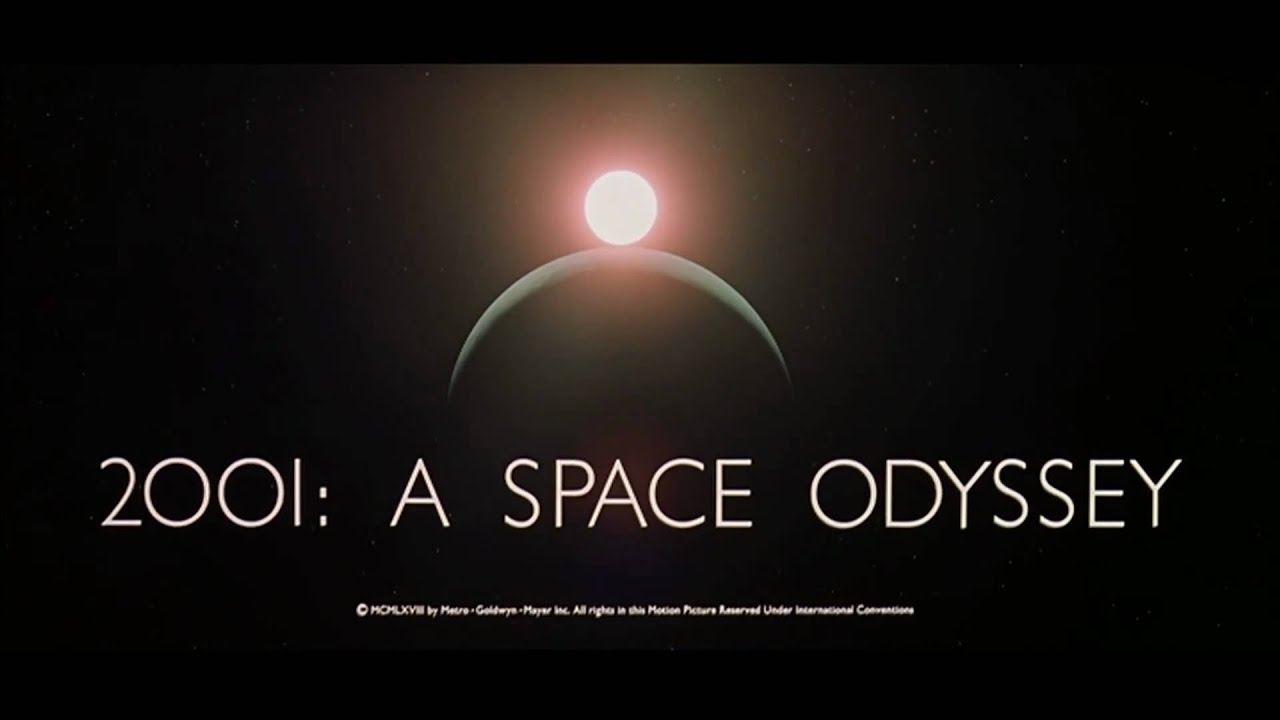
2001: A Space Odyssey


Stanley Kubrick had a very distinctive creative process that he carried throughout all of his films. He would patiently wait for a new trend or genre to emerge and would then contemplate the aspects of the movement. He sought to distill the groups of films down to their essence and to tease out out the underlying philosophies inherent within them. Kubrick would then arguably make the best film of the genre. With "2001: A Space Odyssey," Kubrick not only made the best and most influential science fiction film to date, he made what I think is the greatest and most important film in the history of the art form.

Like many other Kubrick films, "2001" presents some challenges to viewing. In its running time of 160 minutes, only 20 or so minutes have any speaking. The rest of the film includes powerful images that are supposed to inspire contemplation and awe. Because the film has a large plot that encompasses all of human evolution, and because it has a nontraditional method of storytelling, it's easy for some to dismiss the film as too vague or even boring. Ironically, I think "2001" is a very precise film from a director who is famous for being insanely detailed. In this review, I would like to present my own interpretation of the film. My following thoughts must come with a disclaimer that any piece of true art will be open to multiple interpretations. My opinions should not prevent anyone from disagreeing or forming their own views. Debate, I think, more than anything, was Kubrick's intention. 

The film opens with a long musical prologue, which I believe represents the creation of simple organisms in the sea from the primordial material on earth. We then see multiple, motionless images of the African savanna without any land animals or ancestors of human beings. These few images help us grasp the concept that the earth is much older than us and our time span has been short compared to the long timeline of earth's existence.  

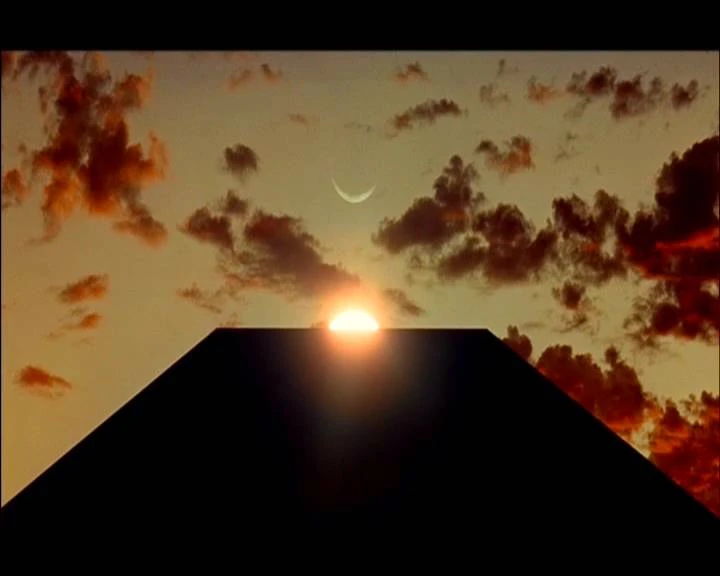
As the images continue, we are shown various animals and a group of timid apes competing with other animals to eat grass. Surrounded by dangerous carnivores, the apes are in constant peril. Their environment demanded an evolutionary leap for their own survival. One night, as the cowering apes huddled together for warmth and protection, one of the them, who is called Moongazer in the credits, stands up to see a giant black monolith pointing to the moon. The other apes follow and are fascinated by a formation that seems artificially placed there. In Arthur C. Clarke's original book, the monoliths were placed by alien lifeforms, but in Kubrick's version, the source of the monolith is left a mystery and up to interpretation. The smooth black monolith symbolizes an evolutionary epiphany or the transfer of necessary information. The apes touch the formation pointing to the moon and discover the concept that will advance their species: the advent of tools. Tools will make possible the next evolutionary jump for the primitive apes, which will culminate in their dominance of earth and their departure into the cosmos. 


But how do primitive apes "find" or "discover" tools? Kubrick has an ingenious scene showing that discovering actually means repurposing. Challenged by an evolutionary need, one of the apes comes upon an animal carcass. It plays around with rib bones and starts using one of them as a hammer. This scene is made even more wonderful by the use of Richard Strauss' "Also Spach Zarathustra," showing the power and grandeur of discovery. At that moment, the ape becomes a human being, at least in trajectory. 

  
The discovery of tools gives rise to the central theme of the film: that technology can be used for both life and death. As for life, tools make it possible for the apes to hunt animals and obtain meat protein, the resource responsible for the growth of the human brain in the next epoch. Tools can also be a form of protection from other predators. But what gives life to emerging human beings also brings death. In the next scene, the apes have separated into hunting tribes and use the tools to battle each other for control over resources, in this case, a watering hole. One of the apes beats another to death and establishes dominance and control. This theme of tools and their connection to life and death will repeat throughout the movie. From the beginning, man has sowed the seeds of his own destruction through technology, an important message to keep in mind during the film's release during the cold war and the era of mutually assured destruction. 

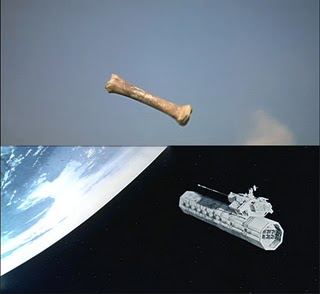
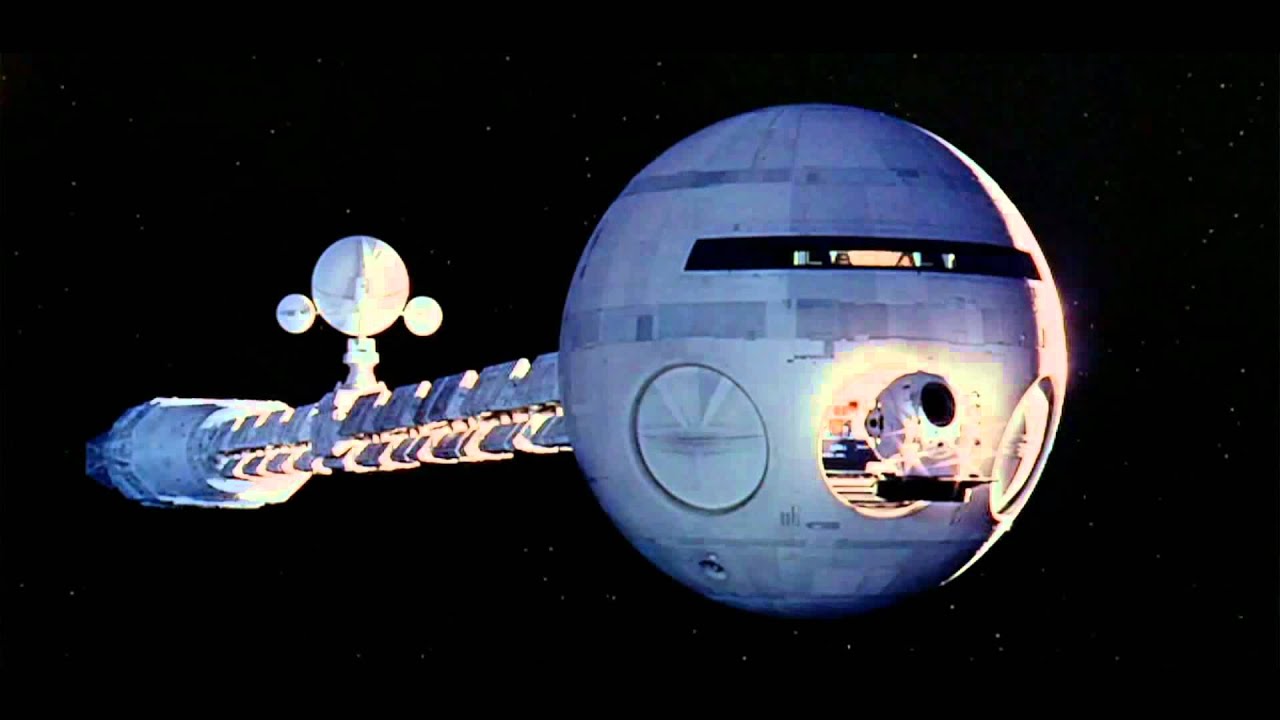
In what has been called the biggest jump cut in film history, an ape throws his bone weapon into the air and it instantaneously becomes a space satellite. The scene places us in the year 2001 after hundreds of thousands of years of human evolution. Our tools have become quite complicated and impressive. Kubrick encompasses the beauty and symmetry of civilization with Strauss' "Blue Danube Waltz." Just as classical music demonstrates a high amount of orchestration and precision, we see beautiful spacecrafts floating elegantly with similar perfect synchronization. Kubrick shows how much science and mathematics have allowed us to coordinate amazingly complicated feats like flying into space and docking ships in zero gravity. What is clear in Arthur C. Clarke's book, but not so much in the film, is that the satellite that morphs from the ape's bone is actually a bomb. Again, technology for both life and death. 


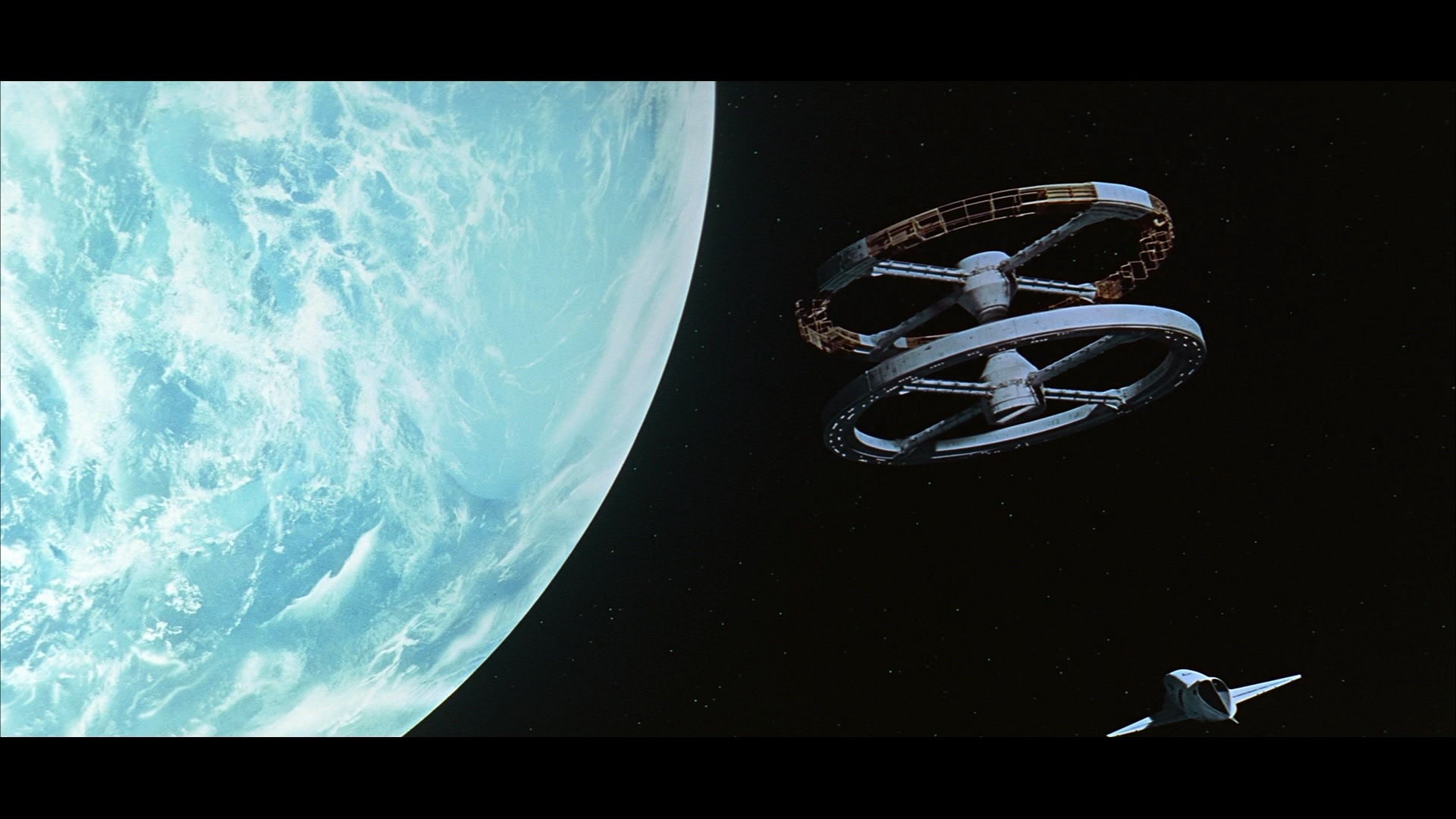
The special effects, which later earned Kubrick's only Oscar, are amazing. The models, backlit set pieces, and camera work make everything look incredibly real. It is humbling to see that Kubrick's effects have not been topped even by CGI graphics. It is worth mentioning that Kubrick made "2001" before anyone knew what earth looked like from space and how objects would act in zero gravity. Everything moves in circular motion not only to show the harmony and beauty of movement but also because scientists believed that ships would have to move with centrifugal force to instill gravity for astronauts. 

One significant problem that Kubrick solved was how one films "space." Indeed, how does one show the vastness and sometimes nothingness of space? His method of including smaller objects next to larger ones helped give scale, which was invaluable to the look of the movie. All future movies set in space, including the Star Wars, Alien, and Star Trek franchises mimic Kubrick's techniques. Part of this film's greatness is the fact that it influenced so many other films that would come to define movie history.   


On the Pan Am commercial spaceship, we are introduced to a scientist who is embarking on a trip to a space station and then to the moon for official government business. A few visual images key us into more of Kubrick's themes: the passengers on board are eating meals that closely resemble baby food; the stewardess has difficulty walking in zero gravity and stumbles around like a toddler learning to walk; finally, a pen slips away from the sleeping passenger and floats away until the stewardess returns it to his pocket. All of these aspects symbolize man entering a nascent stage in space travel. Additionally, these images point to how unnatural space travel is. Human beings are essentially infants outside of earth, drawing comparisons to the weakness of apes in their nascency before they developed proper tools. 

The scientist disembarks from the ship and learns that there is a serious epidemic on the moon base. He prepares for a briefing but then finds out that the epidemic story was actually a decoy to cover the fact that workers have found a black monolith on the moon. In a theme that will come full circle later in the film, deception is a tool developed by human beings that brings both life and death. In this case, the lie was an effort to forestall panic and death. 

The scientist and his team take a spaceship to the moon in order to inspect the monolith. Once again, Kubrick provides an array of amazing, beautiful images that look astoundingly real. These set pieces look so real, in fact, that many have implicated Kubrick in a conspiracy to fake the moon landing using his prowess exhibited in the film. As the scientists arrive at the monolith, they approach it in much the same way as the apes and notice that it is pointing to Jupiter. Challenged this time with  curiosity for discovery, the humans are driven towards the unknown. 


The movie picks up on a ship destined for Jupiter. One could argue that the ship resembles a sperm, once again demonstrating the infancy of humans in space. Several scientists are on board; some are awake while others are in extended hibernation. We are also introduced to one of the greatest film villains of all time: the HAL 9000 computer, which is designed to be the perfect, most advanced tool ever devised by human beings. In fact, HAL is such an advanced tool that he essentially becomes a cognizant human being with critical thinking skills and emotions. He runs the entire ship and maintains a cordial friendship with the astronauts. One of the aspects of this section that I love is how the astronauts, after hundreds of thousands of years of evolution, resemble a collected, almost emotionless computer-like being, while HAL, who just became operational a few days ago, acts like an insecure, neurotic character from a Woody Allen film. Humans have learned to control their emotions and instead depend on reason. HAL, at the beginning of his evolution, is overtly emotional.


HAL confides in the astronauts that he is anxious about the mission and reports that the ship's radio transmitter has been malfunctioning and needs to be replaced. The astronauts suit up, go outside the ship, and check the radio. It is worth noting how Kubrick emphasizes the deep breathing of the astronaut in the space suit, pointing out again how unnatural it is for humans to be in space. After the radio is found to be completely operational, the astronauts question HAL's capability to function correctly, and discuss the possibility of shutting him down. They do this in secret away from HAL's knowledge by turning off audio communication. Amusingly, HAL is able to read their lips and catch on to their plan. He hatches his own plot to lure one of the astronauts outside of the ship by destroying the radio and then attacking him with a satellite spaceship. He also knows that Bowman, the other astronaut, will come to his partner's rescue and will be eventually locked out as well. HAL also kills all of the astronauts in hibernation. So much for putting the computer in charge of everything. 

What is truly amazing about this sequence is how HAL exhibits attributes of a lowly evolved human being (he became operational just a few days prior). After his ascension into basic consciousness, HALS's first concern is to fear for his own survival, just as the lowly evolved apes did. He then uses the modern tool of deception to kill the astronauts. As a sentient human like machine, HAL's first impulse was to kill. At this point, Kubrick really starts to bring home his theme about how our elegant civilization is belied by primitive ape-like instincts to survive at the cost of other beings. 


While HAL's plan is immediately successful, what he doesn't count on is human beings' ability to innovate and adapt. Importantly, Bowman takes control of his emotions, a sign of his higher evolution, and works out a way to reenter the ship using the manual lock. Bowman reenters the ship and immediately goes to disconnect HAL for his own survival. But if HAL is a conscious, sentient being, is Bowman murdering him? As HAL pleads for his life and expresses fear at the loss of his consciousness, Bowman disconnects HAL in a slow methodical way, piece by piece. Compare Bowman's slow, subtle murder of HAL to the ape in the beginning of the film who violently beats an enemy over the head with a bone. The former may seem more civilized and technical, but it's still murder nonetheless.

After HAL is terminated, a television screen begins informing Bowman that the mission to Jupiter was to retrieve another monolith floating around near the planet's atmosphere. Again, this formation represents an evolutionary challenge to the next level. Bowman chases the monolith and from the audience's perspective, the floating monolith turns horizontal and becomes the movie screen. We, the audience, now become part of the experience and transformation as we go with Bowman through a stargate. This stunning sequence, wholly new to film, was achieved by shooting lasers straight into the camera lens.  


But what is the next evolutionary step that we are to take with Bowman? What are we challenged to do? Throughout the film, we continually saw how, in one sense, evolution was based on the creation of tools, which, in turn, gave rise to civilization. While "2001: A Space Odyssey" certainly celebrates the ingenuity of man and his curiosity to explore the cosmos, Kubrick used the film to make the statement to a proud American nation that technological innovation is not necessarily progress. While we have come a long way from primitive apes and bone tools, we still have not evolved passed our primitive instincts to kill and conduct war. Our tools are infinitely more complicated and impressive, but we use them for the same purpose as our primitive ancestors did: life and death. Our advanced spaceship is the primitive ape's bone.  

Our evolutionary challenge is to overcome our primitive instincts and emotions and to live peacefully under pure reason. That is the future. As we pass with Bowman through the stargate, we can see images of earth but in a different, almost psychedelic perspective. Kubrick wants to use filmmaking to give us an experience that will change our perspective on our place in the universe and our direction as a species. See the big picture, not the petty need for violence and destruction. 

At the end of the stargate, Bowman finds himself in a fancy room, presumably some sort of artificial alien habitat for observation. He watches himself age slowly (maybe even evolve slowly). At one point, he knocks a wine glass off a table and sees that the wine is still intact despite the fact that the container is destroyed. This foreshadows Bowman's bodily death and ascension into the spiritual world. As Bowman is lying on his deathbed, he reaches up to another monolith, dies, and transforms into what Arthur C. Clarke called "the star child," a being that can see the world anew.     


While human beings and their ancestors shared some primitive attributes including our penchant for killing in a life-death cycle, there is one common attribute that defined us from the very beginning: a sense of bold curiosity, wonder, and the need to discover. This characteristic has driven both our ancestors and modern humans up the food chain, to the moon, and beyond the stars. "2001: A Space Odyssey" is the only film that I have ever seen that attempts to be an experience rather than passive entertainment. It wants you to see the journey of human beings in the universe, a feat only made possible by the medium of film. Kubrick is not really interested in entertaining us as much as he is in inspiring our awe and wonder, the defining characteristic that makes us human and drives us to greater and greater heights. 

Monday, August 31, 2015

Birdman: Or The Unexpected Virtue of Ignorance


During a key scene in "Birdman: Or The Unexpected Virtue of Ignorance," Michael Keaton's character, Riggan, a washed up action star trying to make a comeback, gets in a heated discussion with a snobby theater critic. After the critic promises to ruin his new broadway play with a stroke of her pen, Riggan excoriates her profession by asking "what has to happen in someone's life for them to become a critic?" He continues saying that critics risk nothing with their opinions and contrasts the artist's experience of giving their heart and soul to a project and creating something out of nothing. "Birdman" is a truly remarkable film about the creative process and what artists endure to make their creation a reality. 

Throughout the film, Riggan is surrounded by different collaborators who constantly bombard him with different perspectives and problems that he needs to face in order to realize his vision. His fellow actors possess their own opinions and nuance of performance; His manager encourages career acumen, that is decisions Riggan has to make in order to realistically keep his status in the film industry; His daughter is the negative voice calling him a has-been; His ex-wife knows the actor as a regular person outside his career and tries to make him a better family man; finally, Riggan has voices in his head representing both insecurity and his momentary triumphs and rise in confidence. 

A notable aspect of "Birdman" is the layered acting. Indeed, this was a high level ensemble effort with no one person totally stealing the show. Michael Keaton is great as Riggan because in many ways, he is playing a version of himself. Mirroring Riggan and Birdman, Keaton played Batman in the early nineties and is currently looking for a career renaissance. Ed Norton gives one of the best performances of his career as Mike, the temperamental actor who values absolute artistic integrity over success. Emma Stone, who plays Riggan's daughter, officially elevates herself from teen idol to a great actress. Even Zach Galafinakis shows acting prowess as Riggan's dose of realism, albeit in a comedic fashion.

But the truly amazing aspect of the film is the directing. Alejandro González Iñárritu has invented a new type of film, one that unfolds organically in real time with continuous forward movement. The movie almost looks like one complete, uninterrupted shot with characters coming and going and then reappearing. Technically, there are only 16 cuts in the entire movie, compared to other films which could have hundreds. This style of film is one that I have never seen before, at least since Alfred Hitchcock's "Rope," which also seems like one continuous shot. The style of directing creates a breathtaking intensity which becomes instantly addictive.The soundtrack, which is mostly composed of jazz drumming, perfectly matches the pace and spirit of the film. Just as the complexity of jazz demands attention, so does the movie garner your complete engagement. "Birdman" is certainly a huge technical feat, one that is immediately impressive.

SPOLIER ALERT: I'm going to talk about the ending and its meaning. The movie begins with the epitaph from Raymond Carver's gravesite: "And did you get what you wanted from this life, even so? I did. And what did you want? To call myself beloved, to feel myself beloved on the earth." In many ways, "Birdman" is about seeking acceptance and admiration from the rest of the world. Riggan is seeking to regain his popularity, even to improve on it by adapting a work of literature to the theater. He wants to be an artist, not merely a celebrity as he is often accused of being. Many of the surreal moments of the film serve to show his inner emotional struggles. At one of his lowest moments, Riggan is convinced of his prowess and popularity in the action world, at least in the past, by an incarnation of his former Birdman character. He is then able to fly literally and figuratively on this emotion above the fray, able to pursue his endeavor with confidence.

Near the end of the film, Riggan makes a decision to replace a prop gun which he uses in the final scene of the play with a real gun in an effort to commit suicide. He shoots himself and the audience and critics laud him as inventing "super realism" in the theater. Of course, it is fitting that Riggan shoots himself at that moment of the play because the story matches his own inability to find love. I also think the plot is a commentary on celebrity and how the audience loves to see an artist melt down and destroy themselves. Riggan's exploits become a version of reality television.

The ending is a bit vague, yet makes sense given the big picture. Riggan is in a hospital bed after shooting himself. He did not die and suffered lacerations on his face. You should notice how his bandages look fittingly like his Birdman mask. After Riggan is told of his artistic triumph and praise, he sees an apparition of Birdman and then jumps out of a hospital window. His daughter then returns to the room and looks out the window, offering a cryptic smile. The enduring question is whether Riggan jumped to his death or flew away as he did earlier in the film. We will never know, but the thematic end is the same no matter what happened. Emma Stone pokes her head out the window and looks down in horror and then up with a smile on her face. Whether or not his body was on the pavement or in the sky, Riggan finally got what he wanted: his play, reputation and artistic integrity soared. The ironic aspect is that Riggan unwittingly made a brilliant artistic choice to actually kill himself in the play. As many artists, he benefitted from the unexpected virtue of ignorance. 

Tuesday, August 25, 2015

Saving Mr. Banks


In "Saving Mr. Banks," Walt Disney is pitted against the curmudgeonly writer of "Mary Poppins," P.L. Travers. In a key scene, they square off and give their respective opinions of the project. Travers views Mary Poppins as a more serious character imbued in her dark past. Ever the optimist, Disney pleads with her to let him reimagine the character as a happy one. He wants her to sing, dance with cartoon penguins, and ultimately rescue not only the children for which she nannies, but also Mr. Banks, a cold, characteristically British father to his family. Take a wild guess who gets their way?

This film is very entertaining and well-acted. Tom Hanks, in particular, is tailor made to play the iconically avuncular Walt Disney. He assumes the role with a twinkle in his eye and a song in his heart. Paul Giamatti, who has a second rate role as a limo driver, shines as an extension of the perpetually happy Disney company. For anyone who has seen "Mary Poppins," and we all have, there is an interesting story to be told, an unlikely and nearly impossible collaboration between two polar opposites, whose arguing creates one of Disney's enduring films.  

Yet, there lurks an annoying and morally repugnant Disneyesque device in "Saving Mr. Banks." For the love of god, must we sugarcoat EVERYTHING to make it palatable? Do we need our spoonful of Disney sugar for anything potentially disturbing? Will Disney allow us to feel a full range of emotions for a bloody change?

Disney argues to take a story rooted in Traver's good natured but desperately alcoholic father, who, despite the work of a helpful nanny/nurse, succumbed to consumption. "Mary Poppins" is an allegory for good intentions that fail, as they often do in life. Despite this deeply personal story, Disney wants to exorcise the film of any negativity, or at least any negativity that can't be overcome. In essence, he wants Mr. Banks to sing "Let's Go Fly a Kite," when, in reality, he would have been singing "Let's Go Throw a Clot." While watching, I began to sympathize with Travers and her obsession with the integrity of her story against corporate commercialization.

But the most interesting aspect of "Saving Mr. Banks" is the fact that it is guilty of the above sugarcoating itself. Walt Disney and friends certainly get the Disney treatment. Disney is presented as the greatest guy on earth, notwithstanding the reality that he was a rabid anti-semite and Nazi sympathizer who invested in German banks during World War II. There really should be a penetrating movie about Walt Disney because it would be fascinating. He was a man who accomplished so many great, imaginative things, but, like most human beings, had serious shortcomings. And that's the point. There are complexities to stories and to characters, particularly when they are based on a true story.

While I was entertained, I could not stomach the inescapable fact that Disney released what could be the most self-serving film of all time. This film was Walt Disney presented by Walt Disney. How could he be wrong?

Sunday, August 23, 2015

Straight Outta Compton


In a press conference following a riot that erupted after a show in Detroit, a reporter asked the members of N.W.A. to comment on the violence detailed in their lyrics. Ice Cube answered point blank: "Our art is a reflection of our reality." "Straight Outta Compton" succeeds in being a timely movie because like N.W.A.'s music in the early nineties, it reflects a current problem of police militarization, racism, and brutality. Seeing N.W.A. speak out about Rodney King and life in Compton, CA, we are reminded that not much has changed in thirty years.

At it's heart, "Straight Outta Compton" is a rags to riches story of how alienated African American outsiders with something to say marketed themselves and their new art form. In many ways, the genius of early rap artists had just as much to do with their business acumen as with their musical or lyrical abilities. Many traditional music producers simply did not get the explicitness and political undertones of the rap movement, which were the attributes that made it great. Rappers took it upon themselves to disseminate their own music and even start successful companies (ie: Death Row). N.W.A's rise to stardom by their own hand is very impressive, to say the least.

While Dr. Dre gets his due as a brilliant behind the scenes artist, the true hero of the film is Ice Cube, whose importance and talent has been overshadowed by his current family friendly ventures. Ice Cube was the soul of N.W.A. who had the most to say about economic squalor and the treatment of the black community by law enforcement.

The movie's noticeable failing is that it intentionally glosses over Dr. Dre's history of violence against women. Ironically, the conspicuous absence of Dre's personal shortcomings actually drew more attention to the issue, causing the artist to apologize in the press. I think presenting Dr. Dre's penchant towards violence with women would speak not only to the film's theme about how violence begets violence, but also elucidate a significant problem in hip hop, which is the continued degradation of women.

Still, the movie is well made and acted. It is certainly worth seeing and contemplating, especially given today's problems with race and law enforcement. It also makes us remember that music at one time was motivated by a message and not only concerned with profits.

Sunday, August 16, 2015

The Big Lebowski


"The Big Lebowski" is one of those rare movies that works on multiple levels. In one sense, the film can be viewed as an entertaining stoner comedy with many colorful characters. The movie has a massive list of hilarious one liners, most of which seem like weird non-sequiturs about Vietnam, nihilists, feminism, etc. The movie operates as kind of a Scooby Doo episode in which The Dude and friends are caught in a crazy mystery surrounding a rug and a kidnapping. To be sure, the movie works very well on this level. But what makes "The Big Lebowski" a truly original and great film is the philosophical milieu in which it operates. The entire movie is essentially an identity crisis for The Dude, who is exposed to different political and social philosophies during his epic adventure.

The film begins with a portrayal of The Dude as the prototypical American male. We see tumbleweeds rolling past the screen and are introduced to an old fashioned cowboy character known as "The Stranger" who talks about the Dude as if he is a legend of some kind. It's worth a momentary pause to reflect on the meaning and history of the word, "dude." While there can be multiple definitions, I think the movie evokes the nineteenth century understanding of the term. The word is derived from a colloquialism said by western cowboys in reference to easterners who wore brand new, store bought clothes. The moniker "dude" was used by cowboys to identify someone who was between two places: the city and the frontier. In this film, the Dude is between two places: a pacifist who perpetrates no evil himself but who passively watches it as it happens around him. The film centers around the Dude's forced entry into the outside world and civic responsibility. Surrounded by different philosophies and modus operandi, the film is the Dude's odyssey through conflicting ideologies and how the representatives of each system use the gullible, largely ignorant protagonist to their advantage.

It is no mere coincidence that the whole chain of events is sparked by thugs mistaking The Dude for someone else and desecrating his rug. It is his connection to this material object, his one material weakness that "really tied the room together," that spurs his identity crisis. This corrupting result of materialism is demonstrated later in a dream sequence in which The Dude is chasing his magic carpet only to be violently pulled back to earth by his other beloved material object, his bowling ball.

Embarking on his journey, the Dude meets a collection of people with differing political and social philosophies who challenge his spectator worldview. At each encounter, he goes through the same process: the Dude is exposed to the philosophy; he flirts with and even repeats lines from the belief system; and thankfully, throws off those beliefs and returns to himself. In each case, the human representations of the respective philosophy turns out to be a complete fraud.  

As The Dude goes in search of a new rug, he meets another Jeffrey Lebowski, the man for whom he was mistaken. It's as if he sees the bizarro version of himself: a rich old man with many philanthropic achievements, most notably the "Little Lebowski Urban Achievers." But as the movie pushes forward, we find out that the rich, high achieving Lebowski is a major fraud; he is a blundering fool on a fixed income who embezzles money from his charitable foundation to cover up a fake kidnapping.

The other large philosophy constantly hovering over The Dude is the militarism of his friend, Walter Sobchak. The Coen brothers somehow anticipated the rise of neoconservatism under George W. Bush as early as 1998. Walter is comically obsessed with Vietnam and consistently supports preemptive violence to solve conundrums. In perhaps the best example, Walter draws a gun during a disagreement at the bowling alley, an action which garners his bowling team a league penalty. Later, when stonewalled by a teenager who supposedly stole The Dude's car and money, Walter destroys a corvette that he suspects was purchased with the stolen money that was in the backseat. Of course, the corvette actually belongs to a neighbor, foreseeing the future mistaken identity between Iraq and Al Qaeda during the Bush years.

The movie takes place during the first gulf war, a conflict that Walter is all to happy to support. It is chock full of references to the cold war and communism and how the wars in the middle east are an extension of both. Sobchak describes the current conflicts as"a bunch of fig-eaters wearing towels on their heads, trying to find reverse in a Soviet tank." But like the other pontificating forces in the film, Walter is also a fraud. Despite his obsession with hardline violence and demonstrations of power, we find that he bends to the whim of his ex-wife by sheepishly babysitting her tiny dog. Also, mirroring the neocon movement, Walter's violence is inexplicably mixed with pacifist religious values. He refuses any action on the Sabbath  citing"Shomer Shabbas! Shomer fucking Shabbas!" Finally, when Walter's intense plans ultimately fail, he takes no responsibility for his actions and insists: "Fuck it, dude, let's go bowling."

"The Big Lebowski" has many other characters who represent a hypocritical system of belief or ethos. "The Jesus," one of the funniest characters in the film, has obvious ties to Catholicism and the secret shame of the religion, pedophilia. The Dude is also introduced to the other Lewboski's daughter, a radical feminist who later uses his trusting nature to get impregnated by him without his knowledge. The Dude also meets Jackie Treehorn, a pornography mogul, who stands for excess and the corrupting power of money. Of Treehorn, The Dude says: "he treats objects like women." Finally, my personal favorite is a group called "the nihilists," who proudly extol that they care about nothing. Walter has two hilarious rebuttals to the nihilists: "There's nothing to fear Donny, these men are cowards" and "Nihilists! Fuck me. I mean, say what you want about the tenets of National Socialism, Dude, at least it's an ethos." Judging from his conflicting comments, Walter doesn't know what to make of a group without a belief system.

The key quote in the movie, which leads to the interesting final question of the film, is "The Dude abides." One one hand, this can be viewed as a compliment, supporting the idea that The Dude is a benevolent force above petty wars and politics. On the other hand, The Dude's agreeableness and escapism into a world of perpetual bowling and laziness can be viewed as a bad attribute. Isn't it a problem that The Dude almost totally ignores the outside world? Isn't that how the ideologues in the film gain power and perpetrate evil? In this way, The Dude can be viewed as a typical American inside a nonchalant bubble, letting the highly ambitious control the fate of the country. After all, when The Dude is finally brought into the real world in which there is a constant battle of political and social ideologies, he is inept and confused in choosing one. I think the Coen brothers leave this point up to interpretation, as they should. The lazy man who stands for nothing may not directly perpetrate evil, but evil can be perpetrated in the name of the willfully ignorant. Perhaps this concept points to the central animating aspect of the film: mistaken identity. In the end, how do we judge the The Dude?

The Coen Brothers have a celebrated filmography that includes masterpieces like "Fargo," "No Country for Old Men," and many others. "The Big Lebowski" deserves to be in this pantheon because of its utter originality and interesting contemplation of America in the 1990's. This movie was not immediately successful or well received, but has grown exponentially in popularity over the years. "Lebowski," as it is affectionately known, is a film that takes a few viewings. While it is funny enough on its surface, its comedy only grows more profound when viewed in the background of American culture and the battle for a controlling philosophy.  


Monday, August 10, 2015

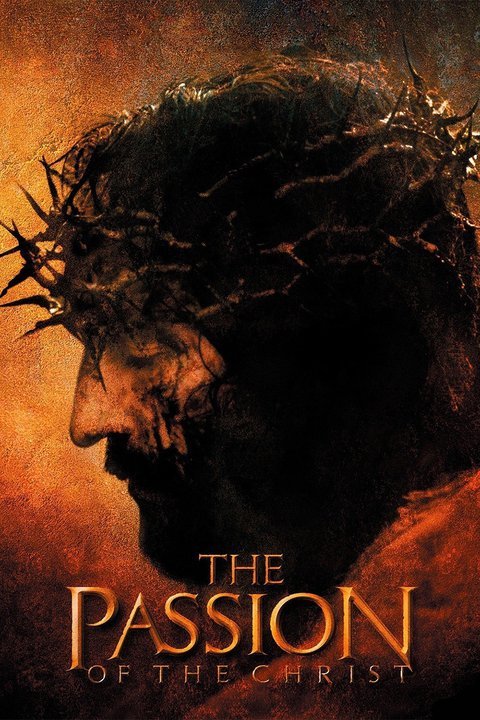
The Passion of the Christ


The question surrounding "The Passion of the Christ" is not how well it is made, but why it had to be made in the first place. There is no denying that Mel Gibson is a talented filmmaker. If Gibson's goal was simply to portray the depth of Jesus's suffering, then he made a perfect film. From the opening scene in the Garden of Gethsemane, it grabs hold of your attention and doesn't let go until the end. Moreover, Jim Cavieziel's performance as Jesus is truly amazing. Given his devout faith, he gives a very heartfelt depiction, one of the best ever put on film.

Ironically, the reason why this film is so good also raises troubling questions about the necessity of making a movie about the passion narrative. "The Passion of the Christ" bears strikingly resemblance to all of Gibson's other successful films, all of which glorify suffering and violence to the highest degree possible for a mainstream film. Whether in "Braveheart," "Apocalypto" or  "Payback," each of Gibson's protagonists endures everything from disembowelment, decapitation, defenestration (my favorite word---we actually needed a verb to describe pushing someone out of a window) to the untimely death of a child. Additionally, many of Gibson's films have an occupying power with its proverbial boot on the neck of a population seeking freedom or atonement. The English in "Braveheart" are interchangeable with the Romans, and to a lesser extent, the Sanhedrin, in "The Passion." Gibson likes his barbarism and civilization stories, and sometimes questions who the real barbarians are.

The problem with borrowing these common themes, particularly the obsession with violence, from Gibson's other movies is that it actually detracts from the importance of Jesus's suffering. Is Jesus just another William Wallace yelling in defiance at the hour of his death? Does Jesus's story warrant more than Wallace's silly, cartoonish death in which he yells "Freedom" despite having the contents of his intrathoracic cavity ripped out? Certainly, Jesus had a bigger impact on the world than William Wallace did and deserved a death with the full story and power behind it. But we never get to see that.

The other problem with adding Gibson's barbarism versus civilization trope is that it continues to single out the Jews (used nefariously as a generalized group) as the people who are solely responsible for Jesus's death. Not only is this somewhat historically inaccurate, but it has led to a millennia of antisemitism throughout the world. Gibson, who has a preexisting penchant for being over the top, made it very clear who the enemies of Jesus were. Jewish high priests in the film have exaggerated features, most noticeably rotted teeth, cracked lips, and cruel looking faces. In reality, the responsibility for Jesus's death lies just as much at the feet of the Romans as it does the Sanhedrin. The difference is that the Romans look nice and pretty in Gibson's film. Interestingly, against the grain of historical knowledge, Gibson portrays Pontius Pilate in a most sympathetic manner. He is the leader of an occupying force in a barbaric land. As the story goes, he finds nothing wrong with Jesus and even tries to save his life by offering to execute Barrabas, a violent murderer, in his stead. The Jewish leaders refuse and Pilate famously washes his hands of Jesus and allows (not orders) his crucifixion.

Yet, the actual history of Jesus's death is far more interesting. Jesus was a Jewish nationalist who spoke against the Roman occupation of Palestine and wanted to return the territory to Jewish home rule. This goal not only entailed protesting against the Romans, but also Jewish leaders in the Sanhedrin who continued to cooperate with the occupation and quell protest. In other words, Jesus had two enemies: the Romans and the Jewish high priests, both of whom would eventually kill him to quiet his insurrection. Throughout his life, Jesus's actions and messages centered around rejecting the legitimacy of Roman rule and the cooperative Jewish authorities who ruled the temple with overbearing rules and taxation. Jesus repeated actions and phrases which rejected both authorities: he "cured" lepers and the unclean and told them to enter the temple in clear violation of the rules; he overturned the tables of monied interests in the temple and set the sacrificial animals, which were to be taxed, out of their pens; he recruited working class fisherman on the coast and paraded into Jerusalem under the shades of palms, proclaiming his own power and rejecting that of the Roman-Sanhedrin complex; finally, he spoke about uprooting the social structure, preaching that the first would be last and the last would be first. Jesus's rejection of the Jewish high priest aristocracy was key to Jewish independence.

In reality, given his reputation for killing a plethora of previous messiahs, Pilate would have been more than happy to crucify Jesus, as he would any other Jewish upstart who created disorder. When the Romans hung the sign on Jesus's cross informing the crowd that he was "King of the Jews," this was not an ironic statement, but a clear charge of the ROMAN law Jesus had violated. He had rejected the established order of the Sanhedrin over the Jewish populace and sought to inspire revolution against the Romans. Pilate did not have to think twice about sentencing Jesus. As a small aside, the reason why Pilate is later exonerated from the responsibility of killing Jesus in the gospels is because those holy works were written at least a century later, during a time when Jews were trying to bury the proverbial hatchet with Roman rule. Blaming Pilate would incite too many Jews against the Romans in a time when peace was needed. In sum, Gibson actually missed a good opportunity to expound on his hatred of occupying powers and clear devotion for tribes fighting for independence.

But the final question is why Gibson thought making a film centering on the graphic suffering and death of Jesus or any human being was worth making. As I said above, the passion narrative has its roots in antisemitism throughout world history. But even more, I think focusing on Jesus's death in gory detail detracts from the entire story of Jesus, which is filled with teachings that say more about the nature of his ministry than his death ever could. Growing up Catholic, I am familiar with the concept that Jesus's death is the primary mechanism by which humanity's sins were forgiven and life everlasting made possible. Nonetheless, Jesus's death and subsequent resurrection were relatively unimportant in the first few decades of the Christian church. Jesus's power came from his message of Jewish nationalism. It was not until later that St. Paul changed the focus of the ministry to be more universal to disparate areas in the Roman Empire. This is the point, later in the game, when the stories of resurrection came into the picture---when the church needed to lift Jesus's status to outsiders. Jesus had been humiliated, crucified, and killed---his story was in desperate need of a plot device to restore his reputation among skeptics. After all, you can't have a messiah if he's dead and in ill repute.

The main point is that Jesus's death and resurrection only has meaning in the shadow of the rest of his life and ministry. It was his message of Jewish collaboration and shared protest against the occupiers and the Sanhedrin that led to his death. All of the sublime statements we remember Jesus saying about love, forgiveness, and social acceptance were said well before his death. Without those teachings and the subsequent writings of the early church, Jesus was just another would-be messiah (and there were hundreds of them) who was killed after he stirred up enough trouble.

"The Passion of the Christ" has some missed opportunities and goes overboard with the violence. Gallons upon gallons of blood are spilled in this film, and the kicks, punches, and torture are delivered liberally. I am not too keen on snuff and torture films---especially when they exist outside a larger story. Yet, it is a strikingly well acted and directed film that deserves some appreciation. In the end, they say the book is always better than the movie. Perhaps a dusting off the bible is in order.


Sunday, August 9, 2015

Patch Adams


As I watched "Patch Adams," one question kept recurring in my head: Would anyone really want this ridiculous clown to be his or her doctor? The problem with this film is that it creates a caricature of the real Hunter Adams, who is, in reality, much more levelheaded. As any comedy starring Robin Williams, "Patch Adams" unfolds as yet another vehicle for him to be manic on camera.

One of the most glaring annoyances is the origin story of Hunter Adams. After feeling depressed and suicidal, Adams voluntarily checked into a psychiatric hospital. After helping a schizophrenic roommate overcome his debilitating fear of squirrels, Adams inexplicably decides that he wants to be a physician so he could "connect with" and "help" his fellow human beings. The problem is that his assertions are so general and vague that it has no causality to pursuing medicine. There are plenty of ways one could connect with and help others; being a doctor is only one option. 

The film never delves into, nor does it care, about why Adams choose to be a doctor when he is perfectly suited to be a motivational speaker, a therapist, or even a clown. Throughout the film, Adams NEVER uses science or medicine to assist anyone. I hate to be the bearer of bad news, but if Adams wanted to lift people's spirits with rubber noses, pools of fettuccine, or balloon animals,  he could have done so without going to medical school for six years and incurring a copious amount of debt. Again, Adams does not use any medical device or knowledge in the film. As a medical student, I can safely say that doctors use science, not stand up comedy, to cure patients of serious ailments. 

Perhaps the most telling storyline of "Patch Adams" is when his pseudo girlfriend is killed by a deranged patient who she was trying to help at the behest of Adams and his philosophy. While the story seems to demonstrate that there is a limit to the inherent goodness of human beings, I read it a bit differently. In my view, it encapsulates the larger problem of the film and its view of medicine: when you are put in a position of great responsibility and you act like a clown in the face of respected medicine, you can kill people. So, in closing, when choosing a physician, don't pick the guy wearing a clown nose; pick the one wearing a battle ready stethoscope and current articles in his or her pockets.          

Monday, August 3, 2015

Tusk


One stormy night, several years ago, Kevin Smith smoked some marijuana and pondered if he could make a gross-out film in the vein of "The Human Centipede," but with better results. His toiling produced "Tusk," a film that will certainly polarize audiences based on their limits for handling disgusting, even disturbing sights. Despite the fact that I have little use for gory shock cinema, I think Smith succeeded in balancing the disturbing with the oddly amusing.

The story of "Tusk" is odd to say the least, and it will serve you better if I speak in generalities so as to preserve the surprises. Suffice to say, "Tusk" is about a young man, played by Justin Long, who finds himself in the house of psychopath who has an obsession with walruses. One of the ways in which Smith succeeds is that he gives his disturbing character an interesting backstory, one that only an inspired auteur could construct. We see the history and depth of psychosis inherent to the character known as "Howard How." Smith not only wants to gross us out; he wants us to be mesmerized by a good story. Howard How is not the one dimensional Nazi surgeon in "The Human Centipede." He does not seek to maim and torture for no reason. On the contrary, Howard How is motivated by loneliness and isolation, two intertwined traits that were the result of inner and outer torture in his past.  

One of the other reasons why "Tusk" succeeds is the casting. Normally, I loathe Justin Long and his rubber-faced shallowness, but his annoying persona is perfect for the character, who, let's say, gets what he deserves. Smith is smart enough to manipulate the audience into disliking the main character, which makes his series of unfortunate events easier to bear. The movie also stars a nearly unrecognizable Haley Joel Osment (of Sixth Sense fame), who has gained an equal amount of weight to what he lost in childhood adorableness. He is so plump, in fact, that he is able to play a character who looks and talks like the rotund Smith, himself. Finally, my favorite character was an Inspector Closeau inspired French speaking policeman played by Johnny Depp. Upon Depp's introduction, the movie takes a slight turn into more comedy than horror. Depp is perfect for this role, as he relishes in the ridiculousness, even comedic uselessness of the character.

As always, Smith has a knack for words, and in many ways, "Tusk" matches his previous successes with "Clerks" and "Dogma." In particular, Smith writes beautifully for the wannabe aristocrat/intellectual who teeters on insanity. The smart, snappy dialogue acts in interesting contrast against the poor skills of Justin Long and the gross subject matter. To be sure, my favorite part of Smith's movies is his writing.

So, here's the issue. I cannot in good conscience recommend this movie for a general audience. It will sicken most people. But for those curious few who intrigued by this type of horror film; and for those Smith fans out there, "Tusk" is a must see. More than anything, "Tusk" proves than even the most ludicrous premise can yield interesting results in hands of a gifted filmmaker.

Sunday, July 19, 2015

Trainwreck


One disconcerting aspect of comedic movies nowadays is the strict separation of the sexes; men and women only seem to be funny around their same sex buddies. Movies like "The Hangover" and "Bridesmaids" typify this trend, creating worlds solely inhabited by either men or women. Comedy ensues based on gender stereotypes: Guys get drunk, get strippers, and engage in hijinx while the feminine version of that involves shopping for dresses, planning themed parties, or singing along to Wilson Phillips. Men and women only seem to be together in lame romantic comedies with predictable, bipolar tropes: women want marriage; guys just want to have fun.

In "Trainwreck" Amy Schumer cleverly turns the genre on it's head. She plays a character fittingly named "Amy," who is a paradoxical living embodiment of the male stereotype. She is just interested in casual sex and has no desire to cuddle, talk, or be romantic in any way. Likewise, all of the male characters in the film are comedically and stereotypically feminine; they are obsessively worried about where relationships are going. This trading up is not only funny, but it also makes you think of the movie stereotypes that we have been unwittingly tolerating.

Whether on her show or in "Trainwreck," Amy Schumer has a strong, almost jarring comedic voice. Her jokes work because they are so unexpected and so over the top, even borderline disgusting. A great example is a story she tells to a domesticated group of moms at a baby shower: she had sex with a guy and got a condom stuck----well, you know where. Schumer's greatest talent is her satirical eye for parodying the ridiculousness of "guy culture." In "Trainwreck," she works for a mens' magazine that publishes stories like "How to jerk off at work and where to do it." Schumer is great at being funny while breaking tradition and just being herself. 

Although "Trainwreck" is an entertaining movie, it is not without fault. There are several parts of the film that are surprisingly unfunny, such as Schumer's misguided parody of independent movies with "The Dogwalker" starring Daniel Radcliffe. The largest problem with the movie involves Judd Apatow, whose influence boxed in Schumer's original voice into his prototypical coming of age story. The first part of the film shows Amy Schumer unapologetically speaking her mind. Unfortunately, the second half reveals that Schumer is actually a "damaged" person in need of growing up and learning how to be in an adult relationship. This theme is in every Apatow movie (Knocked Up, The Forty Year Old Virgin, etc) and undercuts Schumer's character with a formulaic ending. Let Amy be the way she wants to be without judging her as immature or damaged! If she wants to get drunk, smoke pot, and have casual sex, so be it. After all, the whole point of Schumer's comedy is to expand gender and societal norms. While I like Apatow's other movies, I think his collaboration on "Trainwreck" did more harm than good to Schumer's vision. Despite its shortcomings, "Trainwreck" is well worth seeing, even if Apatow overshadowed the funnier voice of a more talented comedian than he.    


Saturday, July 11, 2015

The Wolf of Wall Street


Most of the bankers and businessman who were responsible for the financial collapse of the American economy in 2008 were never brought to justice. They got away with proverbial murder, showing no remorse or fear that they would be deposed from their heights of wealth. But who were these people and why were they so reckless and out of touch? Martin Scorsese's brilliant film, "The Wolf of Wall Street" gives us a sliver of the Wall Street world, ridiculous excess and all. While watching this film, it is easy to evaluate the crazy, over the top behavior of bankers and think that it is massive hyperbole. Did they really throw midgets (little people) at dart boards for fun? Did they really take quaaludes and fly helicopters or drive cars high out of their minds? Did they really fill their offices with prostitutes? Finally, did they really not think they would get caught or there would be a reckoning for their irresponsible business dealings? While I'm sure many bankers engaged in all kinds of bizarre activities with their wealth, the one aspect that they all had in common was the last point: they were teeming with greed and devoid of social responsibility.

The brilliance of this movie really begins with the fact that it unfolds as a typical Martin Scorsese mafia movie like "Goodfellas" or "Casino." Scorsese portrays Wall Street bankers as gangsters engaging in a legal form of mafia like dealing with more innocuous terminology: "insider trading," instead of friends on the inside, "buying equity" instead of gambling, and  "under duress" instead of threats of assault and battery. For me, this film chronicles an era of American business in which no one should be proud. Not since Oliver Stone's "Wall Street" has a filmmaker called out the criminal activity of the banking industry.

Although the film is a surprising three hours long, it doesn't feel like it at all. This comes partly from Scorsese's masterful fast pacing and the sheer enjoyment of watching Leonardo Dicaprio and Jonah Hill, both of whom nail their characters with skill. Dicaprio brings his signature energy and finesse while Hill comically disappears into his role as Donny, the eccentric businessman with huge bleached veneers who married his cousin because "he didn't want anyone else to fuck her." Greedy with hot family members and greedy with money go hand in hand, I suppose.

One of the key and most entertaining scenes in the movie is one in which Dicaprio takes a rare and potent quaalude called a Lemon, which causes him to go into a totally dysfunctional state. He crawls to his nearby Lamborghini and, by his own testimony, miraculously makes it home without injuring himself or his car. Later, we find out that the reality of the situation is that he crashed into several cars and put the lives of others as well as himself at risk. Again, this disconnect from subjective perception and reality mirrors the mindset of the pre-2008 bankers.

In the end, the most powerful part of the movie is its reinvention of a Scorsese gangster film. Dicaprio starts off as a middle class guy looking for success. By his own talent and boldness, he rises to great wealth and intense greed, which ultimately destroys him. When he goes into legitimate business, his past comes to haunt him and he is arrested and jailed. Finally, after he completes his jail time, he returns to the world that he helped to create and, like a virus, propagates the entry of others into the life------just like Henry Hill in "Goodfellas." "The Wolf of Wall Street" stands as a lone testament to the great financial injustice our time. It brings to life a world hidden from the 99%. In one seminal scene, Dicaprio turns to the camera and says, "who gives a shit how it all worked or whether it was illegal? The point is that we all made money." This film may be entertaining and hilarious, but it's also horrific in its truth.

Sunday, July 5, 2015

There Will Be Blood


Once in a great while, a film comes along with such powerful artistic vision that it almost becomes a force of nature. It embosses itself on your consciousness and provides an unforgettable lens through which to view the world. Paul Thomas Anderson's "There Will Be Blood" is one of those films. It excels in all aspects of filmmaking, whether it be the directing, the writing, the sound production, or the cinematography. And it contains the best performance by an actor since Anthony Hopkins played Hannibal Lecter. There is no question that "There Will Be Blood" should be on your short list of films to see before you die.

The film is loosely based on the Upton Sinclair novel, "Oil!" I say "loosely based" because Paul Thomas Anderson takes many liberties with an ambitious oil man in the late nineteenth century. One of the most haunting parts of "There Will Be Blood" is how little has changed in what defines American business from the nineteenth century to the present time: the exploitation of the poor and natural resources in the name of progress and personal enrichment. The first twenty or so minutes of the film are a masterpiece, conveying the themes of blinding greed and the singular pursuit of wealth at the expense of others and even yourself in almost total silence.

Daniel Day Lewis is Daniel Plainview, a silver miner turned oilman who mercilessly ascends in the business world in the hopes of becoming a multimillionaire. Notice that I didn't say Lewis plays Daniel Plainview. That would be inaccurate. Daniel Day Lewis is one of those rare actors who doesn't act; he inhabits characters. His portrayal is seething, practically overflowing with raw emotion. Plainview is a man teeming with hatred, resentment, and impatience under high pressure.

While the film has a sequential plot in which Plainview, accompanied by his son, strikes a rich oil well in California and then tries to build a pipeline to the coast to avoid predatory shipping costs, the true story of the film involves the battles and truces between capitalism and religion as the unifying, motivating force in America. Just as the residents of Little Boston are promised salvation from their local minister, they are also promised roads, food, education, and shared wealth by Plainview and his arriving business venture. Each promise, of course, is untrue and unkept. Both the priest, played by Paul Dano, and the businessman are solely interested in their own power and wealth at the expense of those who trust them. Interestingly, both religion and capitalism use each other at certain times out of necessity to maintain their own sphere of influence. The church comforts the town when oil workers die of unsafe conditions while the opening of the huge drilling well provides a platform for the priest to pontificate. This perpetual melee persists until the end of the movie where there is decidedly a cinematic and historical victor.   

The most powerful aspect of "There Will Be Blood" is its relevance to the present day. The film was released a few months before the financial meltdown of 2008. Just as we see Plainview and the priest exploit a small town for money and power using empty rhetoric, we can see the bottomless greed of Wall Street destroy the lives of indigent people with immoral dealing designed to enrich only a few. You can imagine the following words, spoken by Plainview, recorded in a deposition incriminating Bernie Madoff or another of the financial elite that have separated themselves from humanity in the pursuit of money:

"I have a competition in me. I want no one else to succeed. I hate most people...

There are times when I... I look at people and I see nothing worth liking. I want to earn enough money I can get away from everyone.

...I see the worst in people, Henry. I don't need to look past seeing them to get all I need. I've built up my hatreds over the years, little by little. Having you here gives me a second breath of life. I can't keep doing this on my own... with these, umm... people."

What is clever about the film is that it takes the ambitious entrepreneur of American folklore and shows the unipolar realities of economic growth and challenges our view of "prosperity," if you can even call it that. Plainview casts away everything and everyone in his life, including his son and brother, when they fail to be useful in building his empire. When his son rejects Plainview's ruthless business sense, he downgrades his progeny to "a bastard in a basket." In the end, it all comes back to Daniel Day Lewis's performance. For Daniel Plainview, like Jay Gatsby just a few years later, the price of the American Dream is his soul.  

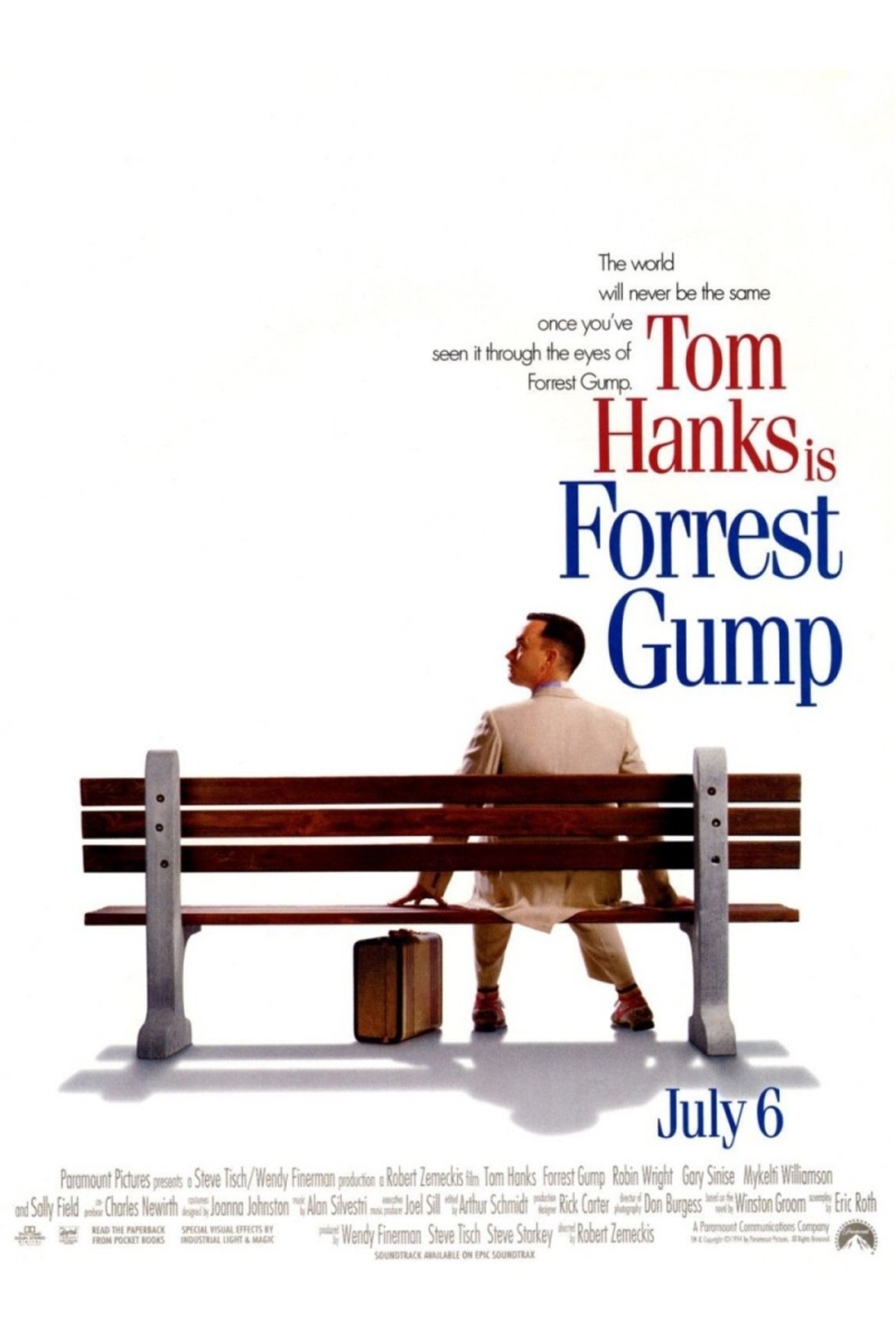
Forrest Gump

One of the signature lines from "Forrest Gump" is "Life is like a box of chocolates; you never know what you're gonna get." Ironically, during my viewing of the film, I knew exactly what I was getting: a stale, hollow shell of a movie with nothing sweet in the middle.

"Forrest Gump" is the worst type of movie. Is it entertaining? Yes. Does Tom Hanks give a great performance? Yes. But both are at a terrible price. The most disturbing aspect of this film is that it propagates a false narrative of American history through an inaccurate lens of nostalgia. I would go so far as to argue that the movie blatantly disrespects important and harrowing aspects of our nation's history, particularly the Vietnam War, racial counterculture, desegregation, and the protest music of the 1960's. "Forrest Gump" is based on a sole premise: that baby boomers will lean over to their friends and/or relatives and say, "Oh gosh, do you remember that?"

The problem is that the aforementioned moviegoer does not really "remember that." The movie presents an America that did not really exist----ever. Let's visit some examples: the movie's sound track, which underscores the entire film, is filled with the great artists that have stood the test of time: Elvis, The Doors, Buffalo Springfield, Jefferson Airplane, Lynyrd Skynyrd, and so on. It seems as though EVERYONE in the sixties was against the establishment, the Vietnam war, and was listening to the above protest music.

Yet, the billboard charts tell a somewhat different story. In 1968, at the height of the Vietnam war protest movement, the number one song was "The Ballad of the Green Berets," a pro-military, ultra patriotic anthem if I ever heard one. "Forrest Gump" distorts the fact that much of rock and roll, particularly the art which dealt with political and social change, was a counterculture in the minority. What's truly amazing about this minority is that its music, beliefs, and rhetoric become the defining aspects of the sixties, though only in retrospect. To honor the bravery and accomplishments of those young people, their story has to be told in the proper context, and in the movie, it is not.

Then we come to the problem of the character named Jenny, who fittingly serves as Forrest's muse for the entire film. Jenny is a walking cliche. She could be a character in a toddler's pop-out book explaining the most general events of American history. Conveniently, Jenny seems to be in tune with every culture movement as they happen. She's a teenage runaway who quickly becomes a hippie in the sixties. She's a coked out, night club jezebel in the seventies. And, most offensively, she contracts AIDS in the eighties. Again, her character represents the gross oversimplification that pervades this film.

Finally, and most maliciously, "Forrest Gump" reduces some of the most important moments in our history to pure buffoonery. My favorite example is the scene depicting the desegregation of schools in Arkansas. Watching African Americans enter those schools after hundreds of years of oppression is a truly serious moment. But Forrest Gump ruins that moment by popping up inexplicably and adding some unnecessary comic relief about a woman dropping her book. Throughout the film, we find out that Forrest is not only present at other historical events, but he is also the catalyst of them. We have Forrest to thank for Elvis Presley, John Lennon's "Imagine," the smiley face, the "shit happens" bumper sticker and the success of Apple computers. Once again, the purpose of these little moments is for baby boomers to turn to each other and say in a dismissive yet giggling manner, "I remember that! He wasn't there!"

The scene that sums up "Forrest Gump" for me is when he is forced on stage at the famous Vietnam protest rally on the national mall in Washington DC. In an intended comedic moment, Forrest is pulled on the main stage and asked what he thought of Vietnam. A military officer then disconnects the microphone cords, rendering his speech completely inaudible. As the microphones are reconnected, we can only hear the words "And that's all I have to say about that." Exactly. "Forrest Gump," both the character and film, has only this to communicate to its audience: nothing.

Thursday, July 2, 2015

JFK


"JFK" is not only one of the most interesting movies that I have ever seen, it is also a paragon of technique and filmmaking. The movie also proves that when Oliver Stone makes a movie about the 1960's, he is almost infallible (see "The Doors," "Platoon," or "Born on the Fourth of July.") In its time (1992), "JFK" was very controversial. Several famous journalists called it a wacky conspiracy theory that had more speculations than truth. However, to view "JFK" like a History Channel special is to miss the point entirely. Oliver Stone is not very adept at fact (see "Alexander," his blunderbuss of a movie). Instead, like many talented directors, he is skilled in emotion and complexity. "JFK" is not asking its audience to believe 100% of its assertions. It is asking us to recall the emotions felt by America on November 22, 1963. More importantly, it is demanding that we always challenge authority in the pursuit of truth. "JFK" is not a source of truth, but it is an exercise in the complexity of cause. In my opinion, this movie stands at the apex of using film to explain complicated historical inquiries (notice I wrote inquiries and not fact).

From the moment that John Williams' beautiful score begins to play its military drums, you will be hooked. Stone brilliantly portrays Kennedy's assassination as a military execution. We are shown pictures of Kennedy riding in his limousine to his eventual demise. Additionally, Stone gives us a brief history lesson, which acts as an overview of the events that will come into play later on. He presents us with introductory snippets that will make more sense at the end of the movie. Cinematically, the audience will be taken from 1963, where everything was a bundle of confusion, to 1968 where a lone district attorney has begun to make sense of all the small tidbits and the nearly impossible complexity. This tactic, which is only five or so minutes into the movie, is inspired and engaging.

The main outline of the story goes like this: Kennedy is shot in Dallas, Texas. A district attorney named Jim Garrison in New Orleans is left with an uneasy feeling after the government submitted the Warren Report, which asserted that a lone assassin named Lee Harvey Oswald killed Kennedy from the Texas Book Depository on Dealey Plaza. Garrison begins to investigate and comes upon an intricate web of interesting facts. Eventually, Garrison forms his own theory which asserts that Cuban exiles, angry military leaders, and the mafia all conspired together to murder a President who shook up conservative government policy, especially in regards to Cuba.

At this point of the review, it is necessary to take a step back and reflect on how difficult it is for a filmmaker to portray the above story. Stone has two contradictory objectives. First, he must show the confusion, dead ends, unanswered questions, and slow progression with which Garrison comes upon his theories. Second, he must also present the vast amount of information in a coherent form for the audience to understand by the end of the movie. Furthermore, the information to be included sometimes only fits together by small strands of logical thinking or speculation. In a way, just as Garrison must prove his case in front of the jury by the end of the film, so must Stone make his case by using primary evidence.

In a movie that has many great attributes, it is the landmark editing that stands as the best aspect. Through small flashbacks and recreations of intricate events (such as the day of the shooting) intertwined with present events (such as Garrison's investigation and the trial of Clay Shaw at the end), the audience is able to understand the growing body of information that explains Kennedy's assassination. Moreover, the chaotic nature of the splices makes the audience understand the just anger with which Oliver Stone made the film. We realize how the government took advantage of pandemonium and fear in order to nonsensically assert that one gunman killed Kennedy. To give an example: in a segment discussing Lee Harvey Oswald's past and how the men who killed Kennedy set him up as a scapegoat, Stone splices in shots of an unknown person fabricating the famous Time Magazine photo of Oswald holding a shotgun and a Communist newspaper. In effect, as Garrison explains the set up, the audience is shown a metaphorical yet real comparison. My favorite part of the film is the final trial of Clay Shaw. November 22, 1963 is reconstructed in the courtroom and in a long live action sequence. The audience is shown what probably happened, what could have happened, and what the government asserted happened.

Jim garrison is an odd yet fitting person to have as the hero of the movie. On one hand, he a rogue district attorney from Louisiana who investigates a crime out of his jurisdiction using resources of his home state and commences a questionable prosecution against a man suspected (at best) of being a CIA contractor. In short, because of his location and choice to prosecute someone without smoking gun evidence, Garrison is not a very good lawyer in the case. On the other hand, given the movie's anger against the government, Garrison represents every man who searches for truth. He speaks for all of us when he asks what happened to our President in 1963 and why the government was not forthcoming about it. Despite a competent but not stellar performance by Kevin Costner, Stone does a fantastic job of making us respect and even empathize with Garrison, even if he is acting beyond his jurisdiction.

The only aspect of the movie that has come under fire after its release is its validity. Legitimate journalists panned Stone for engaging in a crazy conspiracy theory with little or no evidence. Perhaps the best example of Stone reaching to prove his points is the part of the movie involving Mr. X, an ex-military general who provides evidence that high ranking military leaders (which may or may not include Lyndon Johnson) had Kennedy killed to commence a coup de etat of conservative foreign and domestic policy in America. Admittedly, I also question the movie's validity on this point. However, I am not sure that Stone is providing a documentary on JFK in this movie. Stone's purpose is to provide all of the information whether valid or not in order to demonstrate what the public did not know and what we should have questioned after Kennedy's death. Thus, Mr. X is not fact; he is an indication that we should investigate all leads in a crime, even if they produce a dead end.

After "JFK" premiered in the early 1990's, the House of Representaives released a number of documents that actually proved many (but not all) of the assertions in the movie. Oswald was more than a lone gunman; he was a military trained communist defector. The CIA had many covert operations with unquestioned and unlimited funding. An angry group of Cuban exiles funded by the CIA could have planned the assassination. The government covered up many parts of the investigation because of its unknown support of this CIA terror cell. In the end, Oliver Stone has not proven who killed John F. Kennedy on that balmy day in November. But what he has done is capture a nation's anger and frustration. He has encouraged viewers to leap out of the dark and search for answers. Stone used "JFK" to get the ball rolling. In the process, he has created one of the best made and most memorable movies in American cinema.

Jurassic World


Remember when that old, eccentric man thought it would be a good idea to resurrect dinosaurs and then arrogantly thought he could contain them in an amusement park? Well, "Jurassic World" is back to punish that hubris yet again. Despite the fact that the first park was a complete and deadly failure, and despite the fact that a follow-up dinosaur zoo in America led to a rampaging T-Rex in downtown San Diego, Ingen (the bumbling corporation responsible for the series of debacles) now thinks that super-sizing is a way to finally solve the problems that plagued them in the past. Jurassic World, complete with blatantly dangerous dino petting zoos, a flimsy gyrosphere safari ride, and a new diabolical hybrid dinosaur, is really a "fuck you" to murphy's law. There is no doubt that Ingen employs some of the dumbest people on the planet. Without revealing spoilers, let's just say that when the dinosaurs beset the island and wreak havoc, one stupid plan follows another until a crescendo of ridiculousness reaches its apex.

But the true addition to the franchise is the hybrid dinosaur, known as Indominus Rex. Ingen's logic is clear: we couldn't handle a T. Rex and velociraptor separately, so why don't we take all of the most dangerous attributes from both and combine them into one dinosaur. Makes perfect sense to me. Ingen should receive the lifetime achievement medal at the Darwin Awards.

The acting is largely unsubstantial and serves as innocuous filler between the carnage. The new director managed to inject some of Spielberg's favorite themes, including the hapless, self centered parental figure who comes into their own just in time to save their children from certain annihilation (see "War of the Worlds" and "Lincoln" for further examples of men finally becoming daddies).

Chris Pratt is, well, Christ Pratt: the likable but not so bright hero with a dash of machismo. He delivers his often corny lines with a twinkle in his eye, reminding us that he is fully aware of his role as stereotypical heroic beefcake. Bryce Dallas Howard delivers a respectable performance, capturing the "overly ambitious female businesswoman who forgets what's truly important in life" trope well.

But we are not in the seats to watch Pratt or Howard wax philosophical. We are there to watch a dinosaur royal rumble of epic proportions. The movie certainly delivers the action you expect and then some. The ending delightfully culminates in a dino showdown, a veritable who's who of the Jurassic period. In the end, only one dinosaur can rule them all. Can you guess who proves himself king (wink, wink)?

One of the best attributes of the movie is its teeming nostalgia for the first "Jurassic Park." Audiences will delight in little easter eggs scattered throughout the film: returning characters, an abandoned visitor center, and that amazing score from John Williams. "Jurassic Park" is my favorite childhood movie and the current installment rekindled my sense of awe. "Jurassic World" is a worthy addition to the series and is second only to the original. A summer must see!